Travel & Trekking Agency Website Design in Nepal: What Actually Wins Enquiries
Package pages people can compare, trust signals that matter for Nepal travel, and an enquiry path that works across time zones.
A traveller choosing a trekking or tour company in Nepal is usually doing it from another country, weeks or months ahead, with three or four agency websites open in tabs. They cannot visit your office. They cannot tell a good operator from a bad one by the price alone. Your website is the whole of their first impression, and most of their second.
That changes what the site needs to do. It is not a brochure. It is the place where a stranger decides whether to trust you with their holiday, their money and, on a high trek, their safety.
What the traveller does before they ever enquire
Most travellers follow roughly the same path:
- They search for a route or experience — a named trek, a tour type, "Nepal in October".
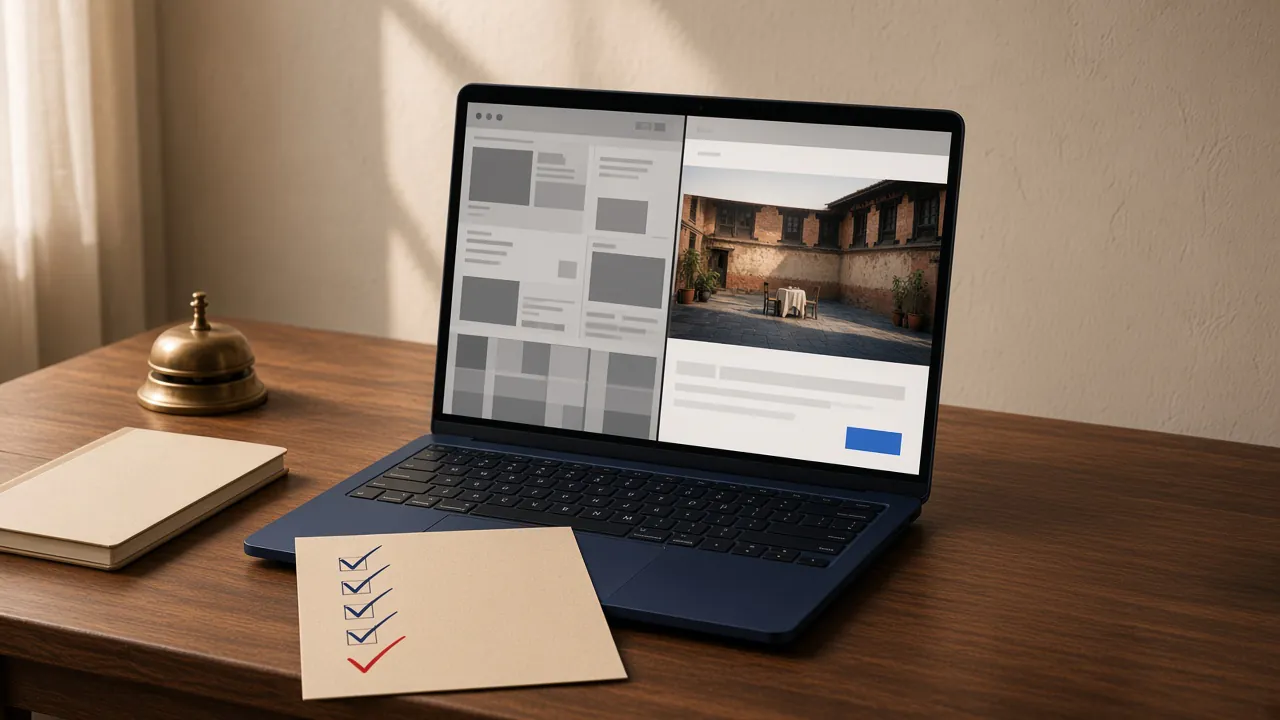
- They open a few operators and compare itineraries side by side.
- They look for reasons to trust one of them.
- They send an enquiry to one or two, and book with whoever answers clearly and quickly.
A good travel agency website is built around that path. Each step has a page, or a part of a page, that serves it.
Package pages people can actually compare
The package page does most of the selling, and it is where most agency sites fall short. A traveller comparing your Annapurna itinerary with someone else's wants the same information in the same place on every package.
A useful package page has:
- A day-by-day itinerary with where you sleep, roughly how long each day's walking is, and the altitude where it matters.
- What is included and what is not, written plainly. Permits, guide, porter, meals, accommodation, transfers, domestic flights — whatever applies. Exclusions matter as much as inclusions; a surprise cost later is a lost review.
- Difficulty and fitness described honestly, including acclimatisation days on high routes.
- Group size and departure options: fixed departures, private trips, or both.
- The price and what changes it — season, group size, upgrades. If you prefer to quote, say what the quote depends on.
- A clear next step on the same screen: enquire about this trip, with the trip name already filled in.
Keep the structure identical across every package. When every page follows the same layout, comparing two of your own trips is easy, and a traveller who can compare easily is more likely to stay on your site than go back to search.
Trust signals that matter for Nepal travel
Travellers worry about different things for Nepal than for a beach holiday. Answer those worries directly:
- Who you are. Real photos of your team and guides, with names. Stock photos of smiling hikers do nothing; your own people do a lot.
- Your registration and memberships, shown with the registration details and only the bodies you genuinely belong to.
- Safety. How you handle altitude sickness, what your guides are trained in, what happens if someone needs to descend or be evacuated, and whether travel insurance is required.
- Reviews you can verify. Link to your Tripadvisor or Google reviews rather than pasting unattributed quotes onto the page. A link a traveller can check is worth more than five glowing quotes they cannot.
- Clear terms. Deposit, balance, cancellation and refund rules, written so a non-lawyer understands them before paying.
None of this needs to be clever. It needs to be specific, and it needs to be true.
An enquiry path that works across time zones
Your enquiries arrive while you are asleep. The site has to hold the traveller's interest until you reply, and make your reply easy to write.
- Keep the form short. Name, email, trip, rough dates, group size and a message. Every extra field loses some people.
- Carry the trip name automatically from the package page, so you never have to ask which trip they mean.
- Offer WhatsApp as well as the form. Many travellers prefer it, and it makes follow-up questions faster.
- Say when they will hear back, and then keep to it. A clear reply within a day beats a perfect reply after three.
- Make sure enquiries cannot get lost. Form emails can bounce or land in spam; keep a second copy somewhere, such as a spreadsheet the form also writes to.
If you take deposits online, check early which payment gateways your bank supports for international cards, and what they cost. It is much easier to design around a real payment option than to retrofit one.
Fast on a phone, on a slow connection
A lot of travel research happens on phones, and a lot of your own guides and partners will open the site on mobile data in the hills. Large uncompressed photos are the usual reason travel sites are slow. Photos should be sized for the screen they appear on and served in a modern format, and the page should still be usable before every image has loaded.
Getting found: SEO for travel agency websites
Search is where most of these journeys start, so the site's structure matters as much as its design:
- Name pages the way travellers search. Use the route names and spellings people actually type, in page titles and headings.
- Write the content travellers want before they book: best season, permits, packing, difficulty, how two routes compare. Those guides attract searches that a package page alone never will.
- Link guides to the packages they relate to, and packages back to the guides.
- Set up your Google Business Profile so you appear when people search for operators in your area. Our Google Business Profile guide walks through it, and the local SEO guide covers the rest of the basics.
For the marketing side beyond the website — content, ads and handling enquiries — see our guide to digital marketing for travel and tour operators in Nepal.
What it costs
A travel agency site usually sits above a simple brochure site, because each package is its own structured page and the enquiry flow needs more care. What moves the price most is the number of packages, whether you need online payments, and who writes the content. Our guide to website costs in Nepal breaks down each of these, and our pricing page shows where our packages start.
How we build travel sites
We built the site for Thousand Miles Travel & Tourism around the same ideas in this guide: comparable package pages, detail on the page rather than behind a form, and enquiries that arrive with the trip name attached. You can see what our website development work includes, or skip straight to a conversation.
Tell us about your agency and your trips and we will give you an itemised quote, with a plain explanation of what each part is for.
Want this done properly, without the guesswork?
Tell us what you are trying to achieve and you will get an itemised quote — no obligation, no follow-up pressure.
Nepal Digital Labs
Websites, hotel presence and business data, from Kathmandu.